
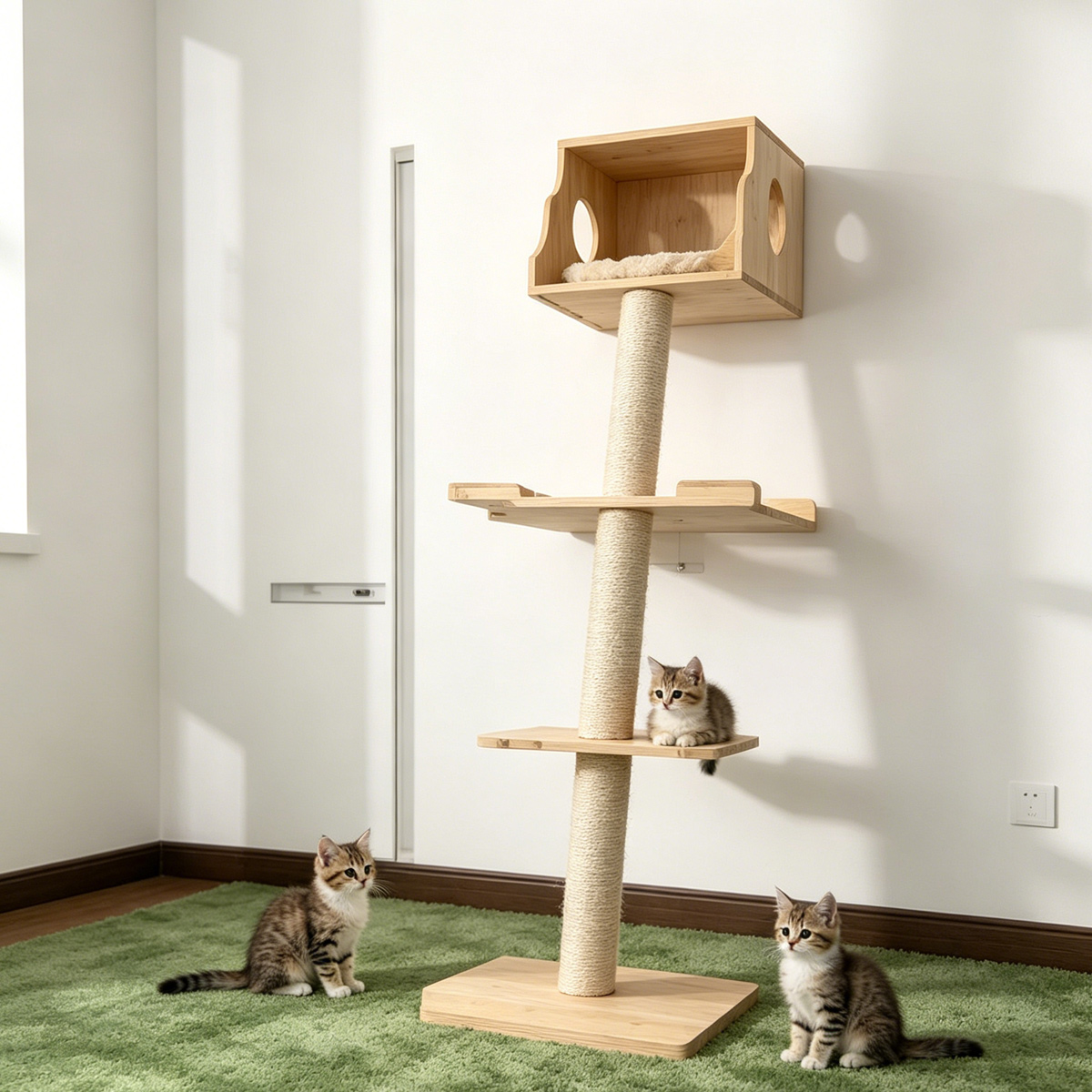
If you’ve ever watched your cat launch onto a cat tree only to see it wobble dangerously, you know how scary and frustrating it can be. A tipping cat tree isn’t just an inconvenience—it can lead to injuries for your cat and damage to your home. Choosing a durable, stable cat tree that won’t tip over is one of the most important decisions you’ll make for your indoor cat’s safety and happiness. At Shuangze Global, we focus on designing sturdy cat furniture built to last. In this guide, we’ll walk you through the key factors to look for, so you can pick a cat tree that’s both safe and long-lasting.
1. The Base: The Foundation of Stability
First, let’s start with the foundation: the base. The base of a cat tree is the most critical part when it comes to stability. A small, narrow base will wobble easily, especially when your cat jumps from the floor to the top perch. To avoid tipping, look for a cat tree with a wide, heavy base. The general rule is that the base should be at least as wide as the height of the tree divided by three. For example, if you’re looking at a 60-inch tall cat tree, the base should ideally be 20 inches wide or more. Additionally, heavier bases (often made of solid wood or thick, weighted particleboard) are more stable than lightweight plastic or thin wood bases. For bulk buyers searching for heavy base designs, check our Stable Base Wholesale Cat Trees line.
2. Check the Weight Capacity
Next, consider the weight capacity of the cat tree. Most cat trees list a maximum weight limit, but it’s important to understand what that number means. The weight capacity refers to how much weight the tree can safely support, including the weight of your cat(s) and the force of their jumps and climbs. For a single adult cat, look for a tree with a weight capacity of at least 50 pounds. If you have multiple cats or a large breed like a Maine Coon, aim for a capacity of 80 pounds or more. Keep in mind that overloading a cat tree beyond its rated capacity will increase the risk of tipping and structural damage over time. Shop heavy-duty designs for big felines at Heavy-Duty Cat Tree Wholesale.
3. Choose the Right Materials
The materials used in the cat tree also play a big role in its durability and stability. The main support posts are typically made of wood or cardboard tubes wrapped in sisal rope. Solid wood posts are the most durable and stable option, as they don’t bend or warp under pressure. Cardboard tubes are lighter and less expensive, but they can compress or break down over time, leading to wobbling. For the base and platforms, look for thick, high-density particleboard or solid wood rather than thin, flimsy panels. These materials are less likely to sag or break under your cat’s weight. All cat trees from Shuangze Global use high-quality, pet-safe materials for long-lasting use. Compare core build materials in our Cat Tree Materials 101 Guide.
4. Evaluate the Design and Construction
Another factor to consider is the design and construction of the cat tree. Look for trees with multiple support posts, especially on taller models, as this distributes weight more evenly and reduces wobbling. The platforms and perches should be securely attached to the posts with screws or brackets, not just glue or staples. If possible, check reviews or photos from other buyers to see if the tree has a history of stability issues, such as leaning or wobbly parts.
5. Extra Stability Features to Look For
It’s also worth noting that some cat trees come with additional stability features, such as wall anchors or straps. These are especially useful for very tall or top-heavy trees, as they allow you to secure the tree to the wall for extra safety. Even if a tree is stable on its own, adding a wall anchor can provide peace of mind, especially for active or large cats.
6. How to Test Stability When Setting Up
When you first set up your cat tree, take the time to assemble it properly according to the instructions. Tighten all screws and bolts securely, and double-check that the base is level. After assembly, give the tree a gentle shake to test its stability. If it wobbles significantly right out of the box, it may not be the right choice for your home.
In conclusion, choosing a durable, stable cat tree that won’t tip over comes down to checking the base size, weight capacity, materials, and construction. By taking these factors into account, you can select a cat tree that keeps your cat safe, happy, and entertained for years to come. If you’re looking for reliable cat tree options that meet all these criteria, explore the Shuangze Global collection of sturdy, well-built cat furniture designed for long-term use.