
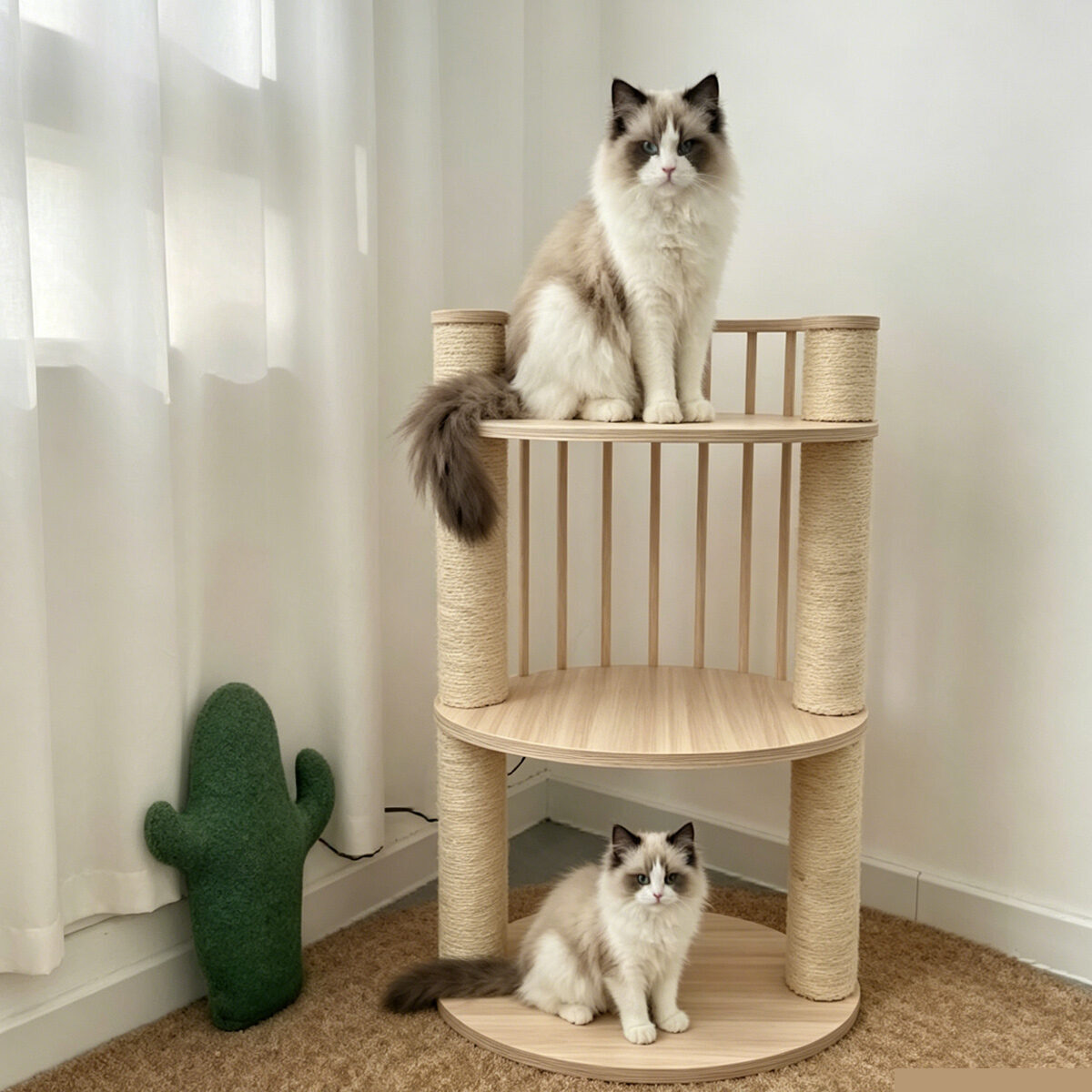
Kittens are lively, active and curious, meanwhile their bodies are fragile and lack sufficient safety awareness. When preparing cat tree for kittens, safety, stability and interesting interaction are the three core selection principles that must be paid attention to.
Priority Safety Design
The overall height of kitten dedicated cat trees should not be too high, to avoid falling and hurting during jumping and playing. All external edges need to adopt circular arc anti-collision design, without sharp corners and hard protruding parts, to prevent kittens from being scratched and collided. Choosing qualified safe kitten pet furniture can fundamentally avoid common accidental injuries of young cats.
Stable Anti-Slip Structure
The base needs to be widened and thickened to enhance overall stability, preventing the cat tree from tipping over when kittens scramble and play vigorously. Internal connecting parts should be firm and compact, without easy-loose gaps to avoid kittens getting stuck accidentally.
Lightweight Interesting Function
Match small-sized soft hanging toys, short-distance climbing ladders and shallow comfortable rest platforms in line with kittens’ physical ability. Too complex high-difficulty activity design will bring sports pressure to young cats and is not conducive to daily entertainment.
Choose suitable playful young cat tree to accompany kittens grow happily.
Material Health Requirements
Kittens like to bite surrounding objects casually, so all surface contact materials must be non-toxic, tasteless and safe. Avoid using easy-falling small accessories to prevent kittens from accidentally swallowing and causing safety accidents.
Scientifically selecting cat trees that accord with kittens’ growth characteristics can not only satisfy their daily entertainment and exercise demands, but also effectively protect their physical safety, and lay a good foundation for their healthy growth.