
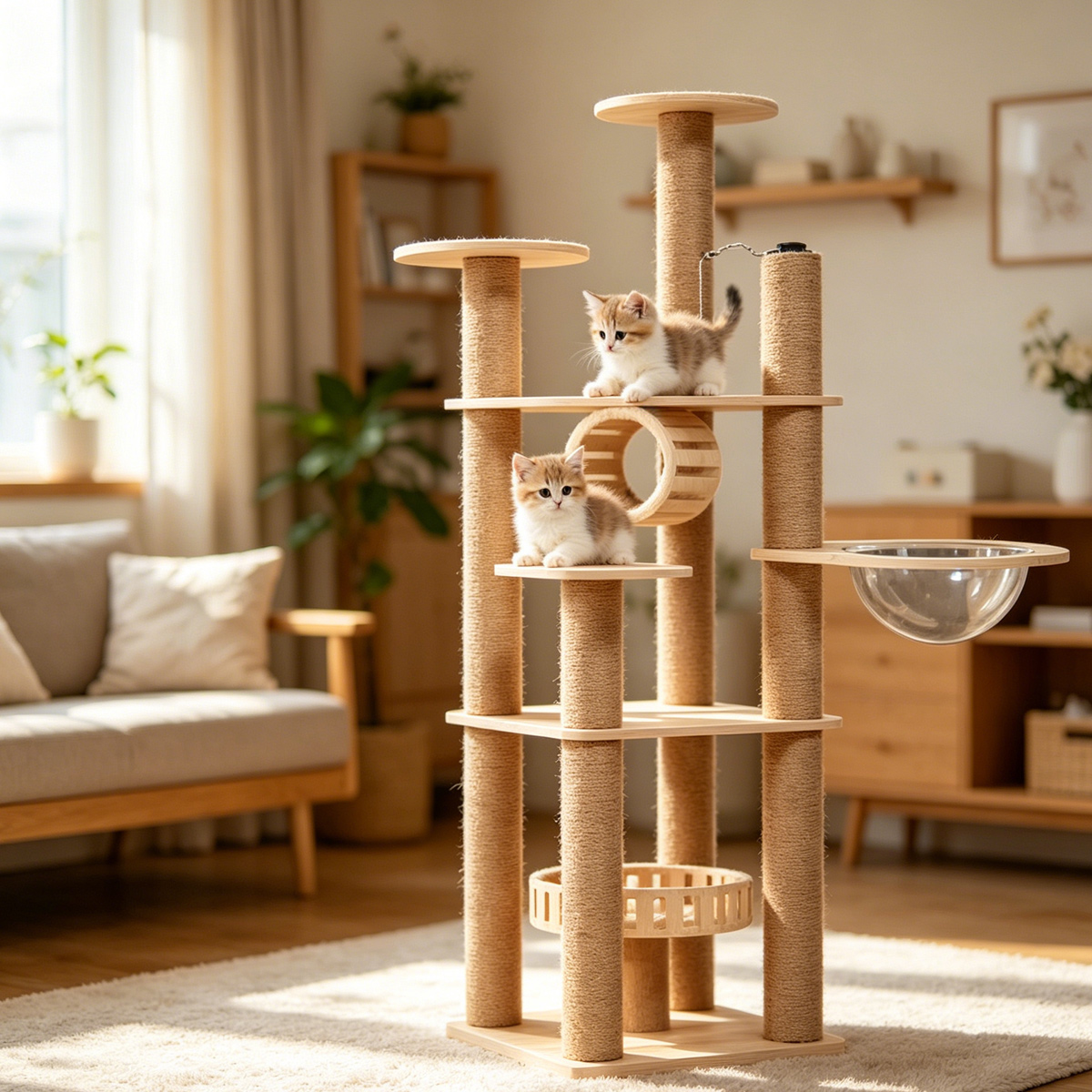
Introduction: Extend the Life of Your Cat Furniture
Cat furniture, such as cat trees, scratching posts, and cat beds, is an investment in your cat’s comfort and well-being. However, regular use by your cat can lead to damage—frayed rope, torn fabric, loose screws, and worn padding are common issues. Instead of replacing the entire piece of furniture, you can rely on easy cat furniture repair solutions with simple DIY cat furniture fixes using household materials. This tutorial covers step-by-step methods to fix frayed cat tree rope and repair torn cat bed fabric, saving you money while extending its life, ensuring your cat has a comfortable space to rest and play for years. This guide shares easy, step-by-step DIY fixes for the most common cat furniture damages, with tips to prevent future damage—all SEO-optimized and compliant with advertising laws.
1. Common Cat Furniture Damages and How to Fix Them
Cat furniture damage varies depending on the type of furniture and how your cat uses it. Below are the most common damages and easy DIY fixes to repair them:
① Frayed Rope on Scratching Posts or Cat Trees
Rope (sisal or cotton) on scratching posts and cat trees is prone to fraying as your cat scratches it. Frayed rope not only looks unsightly but also becomes less appealing to your cat. Here’s how to fix it:
Materials Needed: Old rope (sisal or cotton), scissors, glue (hot glue gun or wood glue), and a brush (optional).
Steps: 1. Remove the frayed rope from the post—cut it off with scissors, making sure to remove all loose threads. 2. Measure the length of the post and cut a new piece of rope to fit (add 5-10cm extra to secure the ends). 3. Apply glue to the bottom of the post and start wrapping the rope tightly around it, securing each turn with a small amount of glue. 4. Continue wrapping until you reach the top of the post, then cut the rope and glue the end to the post to prevent it from unraveling. 5. Let the glue dry completely (1-2 hours) before letting your cat use the post.
② Torn Fabric on Cat Beds or Cat Tree Platforms
Cat beds and cat tree platforms with fabric covers are often torn by cats’ claws. Torn fabric can lead to loose threads and damaged padding, but it’s easy to repair with a few simple steps:
Materials Needed: Needle and thread (matching the fabric color), scissors, and a patch of fabric (optional, for large tears).
Steps: 1. Trim any loose threads around the tear to prevent further fraying. 2. For small tears (less than 5cm), thread the needle and sew the tear closed using a simple stitch (such as a running stitch or whip stitch). Make sure the stitches are tight and even to prevent the tear from reopening. 3. For large tears (more than 5cm), cut a patch of fabric that is slightly larger than the tear. Place the patch over the tear and sew it to the original fabric, using a whip stitch around the edges. 4. If the fabric cover is removable, you can also machine-sew the tear for a neater finish.
③ Loose Screws or Wobbly Cat Trees
Cat trees can become wobbly over time due to loose screws or bolts. A wobbly cat tree is unsafe for your cat, as it can tip over. Here’s how to fix it:
Materials Needed: Screwdriver (or drill), extra screws (if needed), and a level (optional).
Steps: 1. Flip the cat tree over and inspect all screws and bolts—tighten any that are loose using a screwdriver or drill. 2. If any screws are missing or stripped, replace them with new screws of the same size (you can find these at a hardware store). 3. Check if the cat tree is level—use a level to ensure the base is even. If it’s not, adjust the screws or add a small shim under the base to stabilize it. 4. Test the cat tree by gently pushing on it—if it’s still wobbly, check for loose joints and tighten them further.
④ Worn Padding on Cat Beds or Platforms
The padding on cat beds and cat tree platforms can become flattened or worn over time, making them uncomfortable for your cat. Here’s how to replace or refresh the padding:
Materials Needed: New padding (memory foam, cotton batting, or old blankets), scissors, and glue (or a needle and thread).
Steps: 1. Remove the old padding from the bed or platform—if the cover is removable, take it off and remove the padding. If the padding is attached, cut it off with scissors. 2. Cut the new padding to the size of the bed or platform, ensuring it is thick enough to provide comfort (2-5cm thick). 3. Place the new padding in the cover or on the platform, and secure it with glue (if attaching to a platform) or sew the cover closed (if removable). 4. For extra comfort, add a layer of old blanket or fleece on top of the new padding.
2. Tips to Prevent Future Cat Furniture Damage
Repairing damage is important, but preventing it in the first place will save you time and money. Here are some tips to keep your cat furniture in good condition:
① Provide alternative scratching surfaces: Give your cat a dedicated scratching post or pad to redirect their scratching away from cat trees and furniture.
② Trim your cat’s claws regularly: Short claws are less likely to cause damage to rope, fabric, and wood.
③ Rotate cat furniture: Move cat trees and beds to different areas of your home every few months to reduce wear on specific spots.
④ Clean regularly: Regular cleaning removes dirt and debris that can weaken fabric and rope, leading to damage.
⑤ Choose durable materials: When buying or making cat furniture, choose durable materials (such as sisal rope, heavy-duty fabric, and solid wood) that can withstand regular use.
3. When to Replace Cat Furniture (Instead of Repairing)
While most damages can be repaired, there are times when it’s better to replace the furniture. Consider replacing your cat furniture if:
① The damage is severe (e.g., a broken cat tree base, large tears that can’t be patched, or moldy padding).
② The furniture is unsafe (e.g., a wobbly cat tree that can’t be stabilized, or sharp edges that can injure your cat).
③ The furniture is too worn out (e.g., flattened padding that can’t be refreshed, or rope that is frayed beyond repair).
④ Your cat no longer uses the furniture (even after repairs)—it’s not worth investing time and money in furniture your cat doesn’t like.
Conclusion: DIY Repairs Save Money and Extend Furniture Life
Repairing common cat furniture damage with simple DIY fixes is a great way to save money and extend the life of your cat’s furniture. With a few household materials and basic tools, you can fix frayed rope, torn fabric, loose screws, and worn padding in no time. Remember to follow the tips to prevent future damage, and know when it’s time to replace the furniture. By taking care of your cat’s furniture, you’ll provide your cat with a comfortable, safe space to rest and play for years to come—all while keeping your home looking tidy and saving money.