
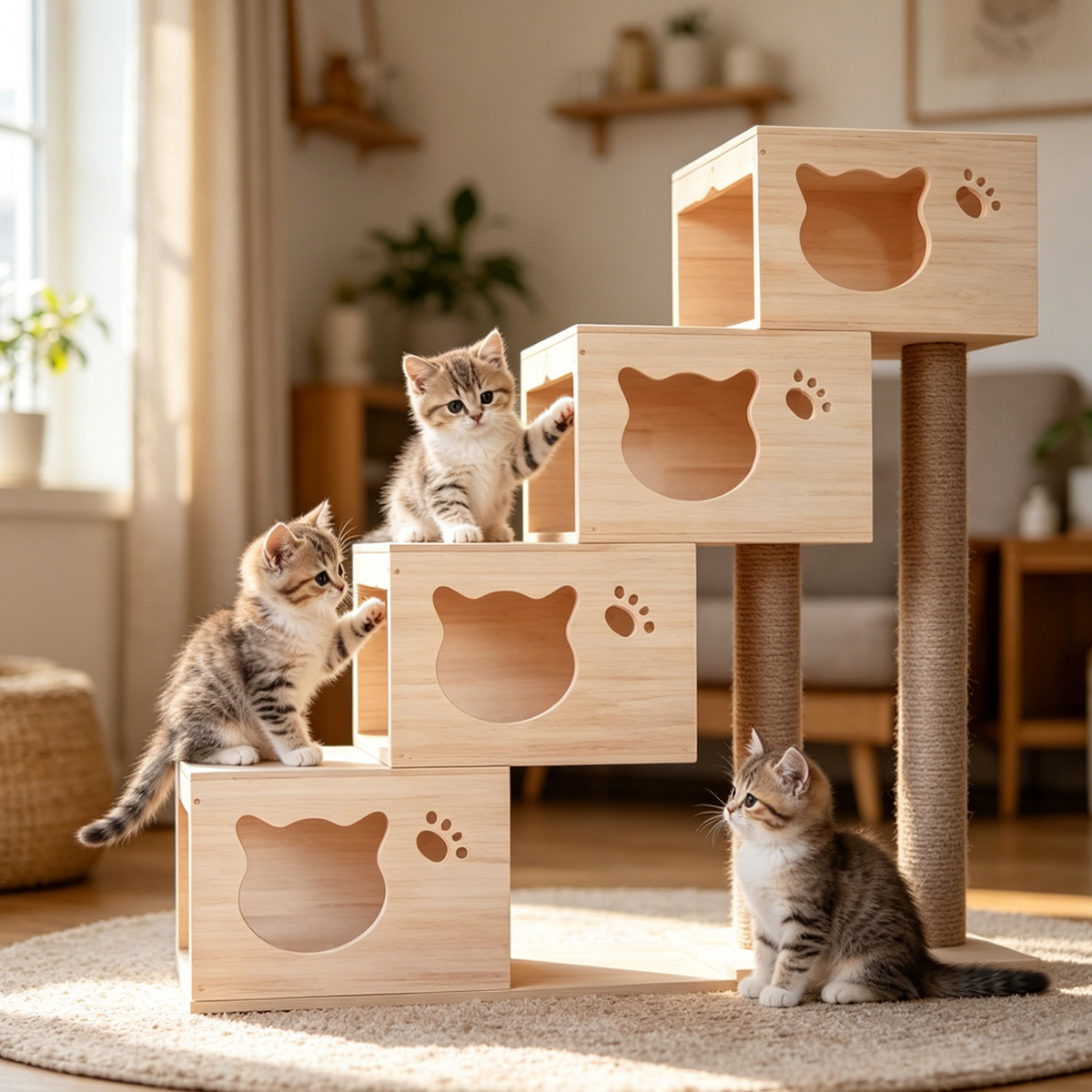
When selecting bulk cat trees, buyers often struggle to choose between MDF composite board and solid wood. We compare all core indicators of the two mainstream pet furniture materials to help you match suitable goods for your market.
Cost & Weight Gap Between Two Materials
MDF medium density fiberboard has lower raw material cost, lighter overall product weight and smaller transportation volume, which cuts ocean freight expenditure. Most mass-market wooden pet furniture adopts MDF structure to control retail pricing for ordinary consumer groups. Solid wood raw material price is higher, and finished cat trees are heavier, bringing higher single logistics cost.
Durability & Daily Use Performance
Solid wood boards have higher hardness, stronger compression resistance and longer service life, not easy to deform after years of heavy cat jumping. MDF is stable under normal indoor environment, but easy to expand and deform after long-term damp erosion. Solid wood is more suitable for commercial long-term use scenarios.
Suitable Customer Groups for Each Board Type
For budget offline pet shops and cross-border e-commerce sellers, MDF cat trees bring higher profit margins. For high-end boutique stores, pet cafes and long-term breeding venues, solid wood series are more cost-effective in long-term operation. You can mix two material styles in one bulk order.
We supply both MDF and solid wood cat tree series. Tell your market positioning to get material matching suggestions.