
What “Entertainment” Really Means in an Indoor Cat Tree
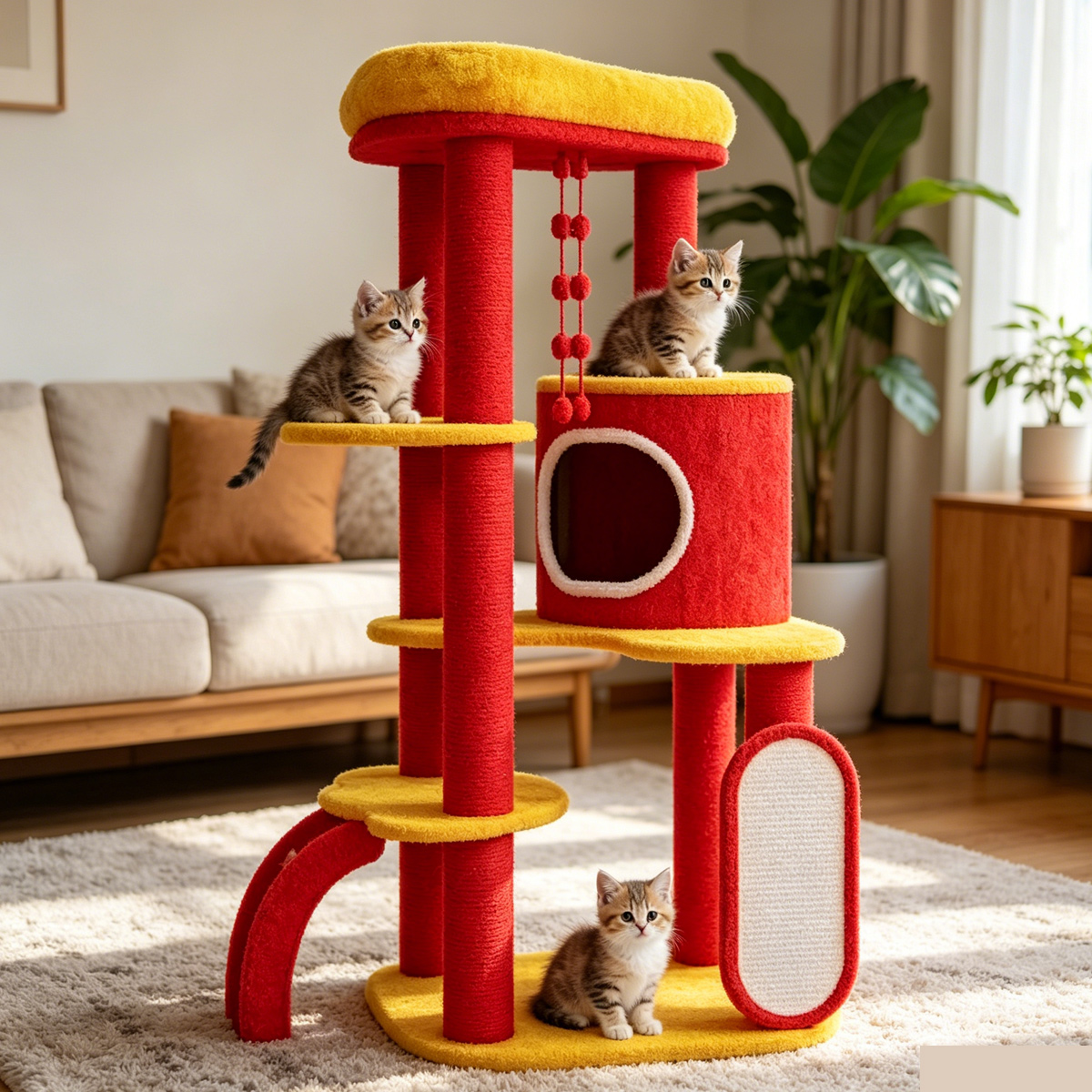
An entertainment cat tree is more than a taller scratching post. It brings three natural behaviours into one footprint: climbing, scratching and hiding. When they are designed together, the product solves a daily problem for the end buyer — an indoor cat with plenty of energy and limited floor space.
Play, Rest and Scratch in a Single Footprint
A well-designed unit stacks a sisal-wrapped post, several resting platforms, and an enclosed condo or tunnel. A multi-level cat tree with tunnel, for instance, gives cats a route to run through, a place to retreat and a legal surface to scratch, while taking up no more floor area than a small side table. Hanging pom-pom toys or a sloped sisal ramp add the interactive detail that helps a listing stand out.
From a retail angle, this three-in-one structure also answers the objection heard most often at the shelf: “my apartment is too small.” One unit replaces a bed, a post and a hideaway, which is far easier to justify at the counter than three separate items.
Materials Hold Up Differently in Daily Use
Most bulk programmes use melamine-faced density board or particle board for the frame, plush fabric for resting areas, and natural sisal rope for posts. A sisal scratching post cat tower tends to wear longer than carpet-wrapped alternatives in humid climates, because sisal resists fraying and does not trap odours as easily. Plush finishes stay popular in colder markets and for senior cats.
Finish matters as much as the frame. Low-odour water-based coatings and securely fastened fabric edges are now standard requests from European and North American buyers, and they are worth confirming on the specification sheet before you approve a sample.
Why Ready-to-Ship Bulk Stock Shortens the Buying Cycle
Custom production has its place, yet it rarely fits a seasonal peak. Working from existing inventory lets you reorder in weeks instead of waiting through a full production slot.
Meeting Seasonal Demand
Q4 gifting and spring refresh promotions arrive on fixed dates. Holding cat tree bulk stock means you can respond to a sudden sell-through without paying air freight to rescue a late order.
Testing New Markets Without Overcommitting
New styles carry risk. Low MOQ cat tree wholesale, combined with mixed container loading, lets you place six styles in one container rather than one style across six — a practical way to read real sell-through data before scaling up.
Matching Indoor Cat Trees to Local Demand
Small Apartments vs. Multi-Cat Households
In dense European and Japanese cities, compact footprints sell faster than height. A compact cat tree for small apartments with vertical platforms uses wall space instead of floor space. In North America and Australia, where multi-pet homes are common, buyers look for wider bases and duplicated resting spots — the territory of multi-cat cat tree wholesale assortments.
Stability Checks Before Container Loading
Tipping is the complaint resellers receive most often. Ask about base width, post diameter, wall-anchor options and carton drop-test results. Clear cat tree quality inspection standards, agreed in writing before production, protect both sides and keep return rates low.
OEM, Private Label and Packaging Support
Customisation That Helps Units Move
Colour matching, fabric swaps and branded cartons are usually the first requests from distributors. A custom private label cat tower programme lets retailers build recognition without developing tooling from scratch, while easy assembly cat trees reduce the negative reviews that follow confusing instructions.
Packaging and Freight Realities
Cat trees are bulky but light, so freight is calculated on volume. Flat-pack cartons, corner protection and moisture barriers matter on long sea routes. A supplier experienced in cat furniture packaging for bulk orders and international shipping for bulk pet furniture will quote CBM per carton upfront, so your landed cost stays predictable.
Quick Checklist Before You Order
- Carton dimensions, net and gross weight, and CBM per unit
- HS code and documentation required for your market
- Agreed inspection standard and acceptable defect tolerance
- Lead time for ready stock compared with custom runs
- Spare parts supply and after-sales handling
Frequently Asked Questions
Can I mix different styles in one container?
In most programmes, yes. Mixed loading is commonly used for trial orders and for seasonal assortments where shelf variety matters more than unit cost.
What is the usual minimum order quantity?
It varies by structure and finish. Many suppliers accept small trial quantities on ready-stock models, then apply lower unit pricing at full container volume.
How is transit damage usually handled?
Photograph the carton and the affected panels on arrival, keep the original packaging, and report within the agreed window so the claim can be matched to the inspection record.
Working With a Long-Term Supply Partner
Reliable wholesale supply comes down to consistency: stable materials, repeatable quality, honest lead times and clear packaging data. Review the full indoor cat tree wholesale catalogue, compare structures against your local price bands, then contact the export team for a current stock list and quotation.