
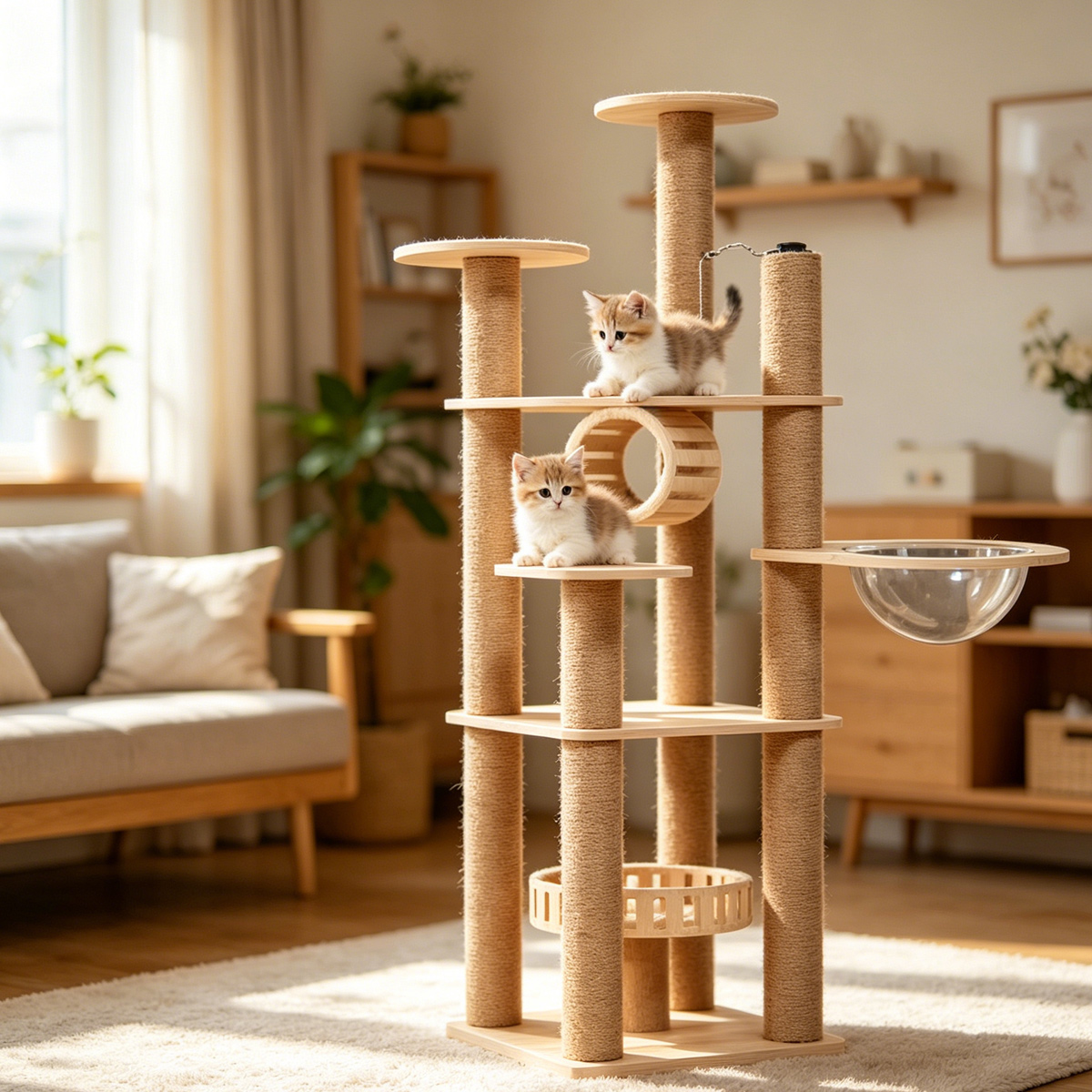
Multi level cat tree are popular pet entertainment facilities, but many owners living in small apartments hesitate when buying them. They worry that multi-layer structures will occupy too much indoor space and affect daily family walking and living. In fact, reasonable style selection can perfectly solve this problem.
Space Occupation Analysis
Standard multi-level cat trees expand activity space through vertical height design instead of occupying a large horizontal floor area. Compact multi-layer styles only take up small corner space, and make full use of upper idle space indoors. Compared with large single-layer pet facilities, it saves more ground space.
Practical Functions for Small Families
A complete multi-level cat tree integrates climbing platform, resting nest, scratching post and entertainment hanging toys. One piece of furniture meets all daily activity needs of cats, avoiding scattered placement of various independent pet supplies. It effectively reduces the number of indoor pet goods and keeps narrow space tidy. If you are troubled by limited indoor area, it is very suitable to choose cat tree for small apartment to meet cats’ daily entertainment demands.
Usage Advantages for Indoor Cats
Living in small houses, cats lack enough outdoor activity space. Multi-layer structures can satisfy their climbing, jumping and high overlooking instincts, help them release daily energy, and relieve bad emotions caused by narrow living environment.
Selection and Placement Tips
Small apartment residents should choose slim vertical multi-level cat trees, and avoid oversized wide-body styles. It is best to place them in wall corners, balcony edges and other idle positions, which will not block family daily moving routes. Choosing proper space saving cat tree can balance space and pet demands well.
Generally speaking, well-selected multi-level cat trees are totally worthy for small apartments. As long as the size and placement position are arranged properly, it can bring rich daily fun to cats without affecting family normal life.