
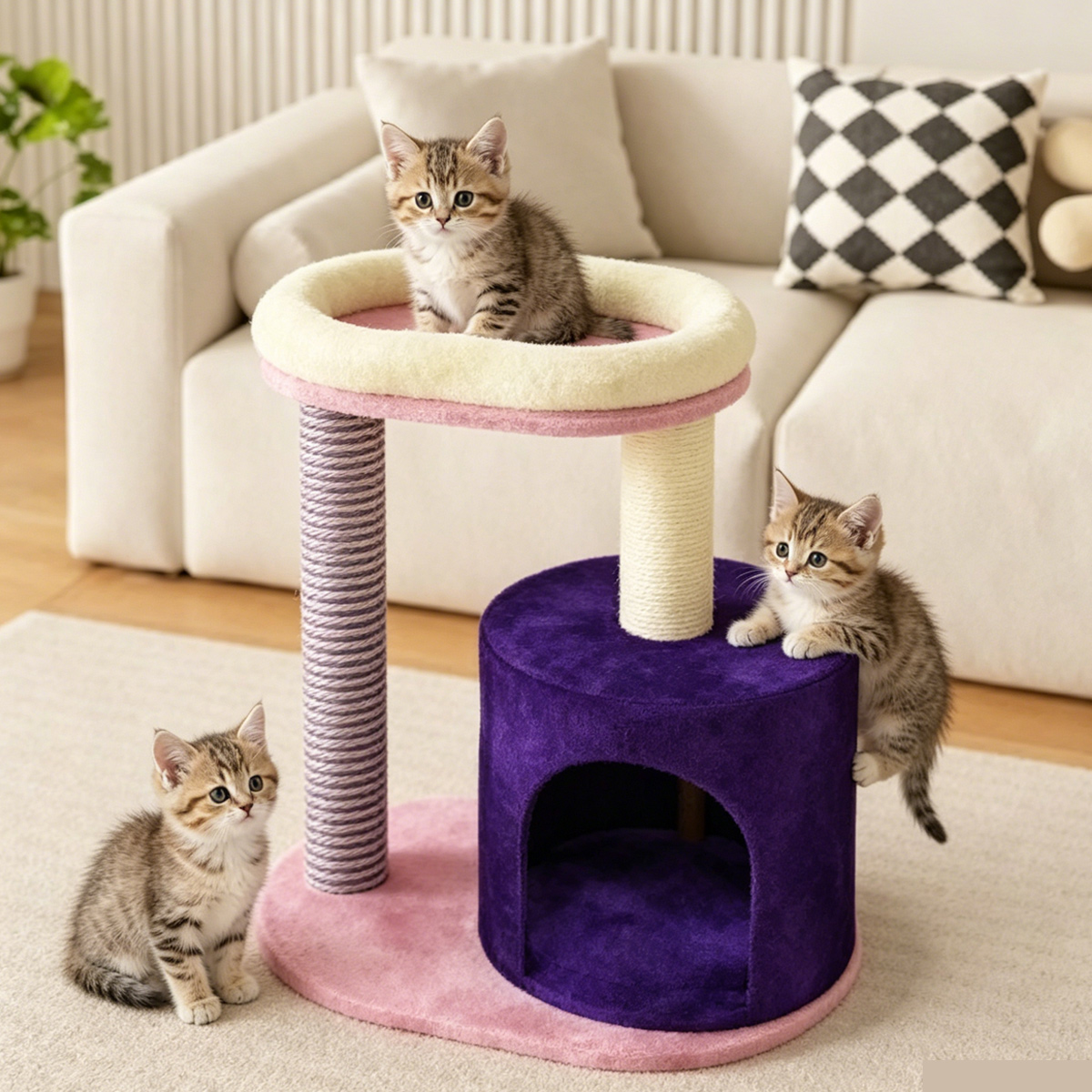
Importance of Stable Base for Cat Trees
A stable base can effectively prevent the cat tree from shaking and overturning when pets jump and climb, avoiding safety accidents and product damage. For multi-layer high cat trees, the load-bearing pressure of the base is greater, and the structural stability requirement is higher. Products with unqualified base design are prone to tilt, collapse and other problems after long-term use, resulting in customer complaints and after-sales returns. Therefore, base quality inspection is the key link of bulk procurement of wholesale cat trees, and our professional cat tree quality inspection standards cover comprehensive base testing items.
Common Base Structures and Materials
High-quality wholesale cat tree bases mostly adopt thickened high-density board structure, with larger floor area and stronger compression resistance. Some high-end products are equipped with weighted base design to further improve stability. The surface is wrapped with wear-resistant and non-slip fabric to increase friction with the ground and prevent sliding. Inferior products use thin boards and small-size bases to save costs, which cannot meet long-term commercial and household use needs. All our durable cat trees adopt reinforced base design standards.
How to Check Base Quality Before Purchase
Wholesale buyers can judge the base quality through simple detection methods. First, check the base thickness and overall flatness to ensure no deformation. Second, place the product on the flat ground to test the stability and shake it slightly to observe whether there is obvious shaking. Finally, check the base material density and wrapping tightness to ensure no hollowing and loose phenomena. Strict base screening can effectively improve the overall quality of bulk orders.