
Introduction
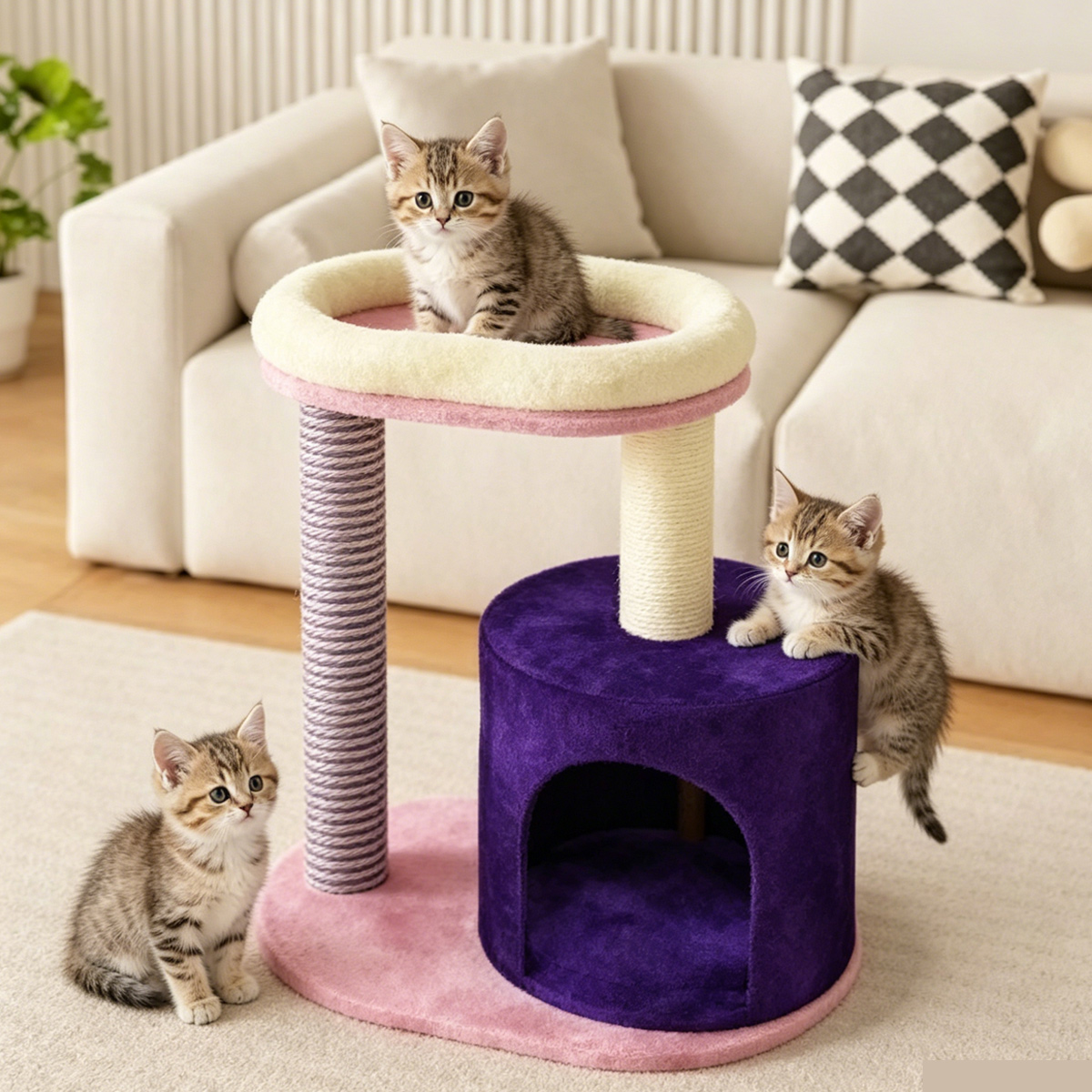
When investing in a cat tree, the material is one of the most critical factors to consider—it directly impacts durability, your cat’s enjoyment, and how well the piece fits into your home. cat tree materials fall into three core categories: sisal, carpet, and wood, each with distinct advantages and drawbacks. For cat owners, completing a thorough cat tree material comparison helps make an informed decision that balances your cat’s natural behaviors, your budget, and your home’s aesthetic. This guide breaks down each material in detail, highlighting their pros, cons, and best uses, so you can choose a cat tree that lasts and keeps your feline friend happy.
1. Sisal: The Go-To for Scratching
Sisal is a natural fiber derived from the agave plant, and it’s widely regarded as the gold standard for scratching surfaces on sisal cat tree designs. Its rough, textured surface is perfect for cats to sharpen their claws, which is a natural instinct that helps them maintain nail health and mark their territory. Unlike synthetic materials, sisal is non-toxic and eco-friendly, making it a safe choice for cats who love to chew or lick surfaces.
One of the biggest advantages of sisal is its durability. It resists fraying and can withstand even the most enthusiastic scratchers, making it ideal for the vertical poles of cat trees. Sisal also doesn’t trap fur as easily as other materials, which means less maintenance for you. However, sisal isn’t perfect—its rough texture makes it less comfortable for cats to rest on, so it’s best used for scratching poles rather than platforms or resting areas. It may also shed slightly over time, though this is minimal and easy to clean up.
When shopping for a sisal cat tree, look for tightly woven sisal rope or fabric. Loosely woven sisal will fray faster and won’t hold up to heavy use. Sisal is also available in natural or dyed colors, though natural sisal is the most popular choice for its durability and neutral appearance.
2. Carpet: The Cozy Choice for Resting
Carpet is a popular material for cat tree platforms, perches, and enclosed areas, and most carpet cat tree styles prioritize soft, cozy texture that cats love to nap on. It provides a warm, comfortable surface that mimics the feel of a soft bed, making it perfect for cats who spend hours resting on their cat trees. Carpet also comes in a wide range of colors and patterns, making it easy to find a cat tree that blends with your home decor.
While carpet is great for resting, it’s less ideal for scratching. Most carpet materials are softer and more prone to fraying, especially if your cat is a heavy scratcher. It also traps fur, dirt, and odors, which means you’ll need to vacuum and clean it regularly to keep it fresh. Additionally, some low-quality carpets may contain synthetic fibers or chemicals that could be irritating to cats with sensitive skin.
If you choose a carpeted cat tree, opt for high-quality, pet-safe carpet that’s durable and easy to clean. Look for short-pile carpet, as long-pile carpet is more likely to trap fur and become matted. You can also find cat trees with removable carpet covers, which make cleaning even easier.
3. Wood: The Sturdy Foundation
Wood is the backbone of most cat trees, used for frames, bases, and platforms, and premium wood cat tree frames deliver unmatched sturdiness and stability, which is essential for multi-level cat trees that need to support your cat’s weight. Wood also has a timeless, stylish appearance that blends well with most home decor styles, from modern to rustic.
There are two main types of wood used in cat trees: solid wood and plywood. Solid wood is the most durable and long-lasting, but it’s also more expensive. Plywood is a more affordable alternative that’s still sturdy, as long as it’s high-quality and properly constructed. Avoid cat trees made with particleboard, as it’s weak and prone to warping or breaking over time.
While wood is great for structure, it’s not ideal for scratching—its hard surface can damage your cat’s claws and is less appealing than sisal or carpet. For this reason, wood is usually covered with sisal or carpet on scratching surfaces and platforms. It’s also important to ensure the wood is sanded smooth to avoid splinters that could injure your cat.
How to Choose the Right Material for Your Cat
The best cat tree material depends on your cat’s habits and your needs. If your cat is a heavy scratcher, prioritize sisal for the poles and carpet for the resting areas. If you have a senior cat or a cat with joint issues, carpeted platforms will provide more comfort. If you value stability and style, look for a cat tree with a solid wood frame. Always verify you’re purchasing pet-safe cat tree materials free of harsh chemical coatings or cheap synthetic fabrics that irritate feline skin.
You can also find cat trees that combine all three materials—sisal poles, carpeted platforms, and a wood frame—for the best of all worlds. This combination ensures your cat has a place to scratch, rest, and play, while the wood frame keeps the cat tree stable and durable.
Conclusion
Sisal, carpet, and wood each play an important role in cat tree design. Sisal is the best for scratching, carpet is ideal for resting, and wood provides the sturdy foundation needed for a safe, long-lasting cat tree. By understanding the pros and cons of each material, you can choose a cat tree that meets your cat’s needs and fits seamlessly into your home. Remember to prioritize pet-safe, high-quality materials to ensure your cat’s health and enjoyment for years to come.