
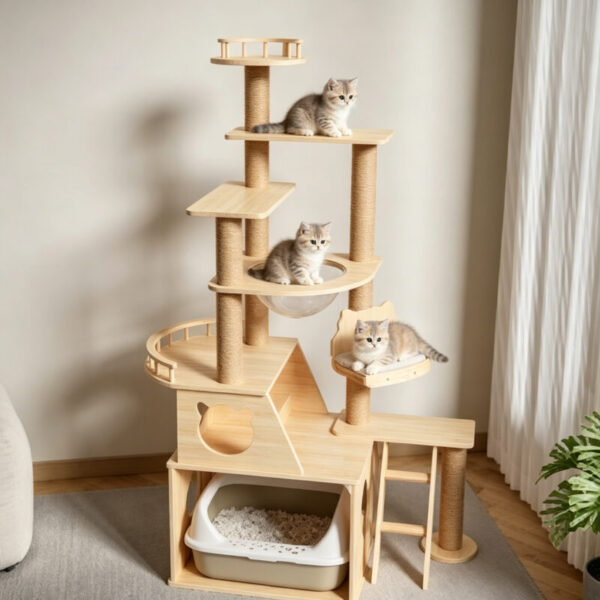
Bringing home new cat furniture—whether it’s a cat tree, cat bed, or cat condo—can be exciting, but many cats are hesitant to use it at first. Cats are creatures of habit, and any new object in their environment can make them feel anxious or uncertain. They may avoid the new furniture, hide from it, or even act aggressively toward it. This is normal behavior, and with a little patience and the right techniques, you can help your cat adapt to new furniture quickly. This guide will share practical new cat furniture tips to encourage your cat to accept and love their new cat furniture.
1. Prepare the Environment Before Bringing the New Furniture Home
The key to helping your cat adapt to new furniture starts before you even bring it home. By preparing the environment, you can reduce your cat’s anxiety and make the transition smoother.
• Choose the right location: Place the new furniture in a quiet, low-traffic area where your cat already feels comfortable. Avoid placing it in a busy part of the house (such as near the front door or kitchen) or in a new area your cat hasn’t explored yet. This will help your cat feel safe when approaching the new furniture.
• Familiarize the space with scents: Before placing the new furniture, you can place a blanket or towel with your cat’s scent (or your own scent) in the area. Cats rely heavily on their sense of smell, and familiar scents can help them feel more at ease with the new object.
• Avoid making sudden changes: If possible, avoid rearranging other furniture in the house when bringing home the new cat furniture. Sudden changes to the environment can increase your cat’s anxiety and make it harder for them to adapt to the new item.
2. Gradual cat furniture introduction
Cats don’t like sudden changes, so introducing the new furniture gradually is crucial. Rushing the process can make your cat more resistant. Here’s how to do it:
• Let your cat explore at their own pace: When you first bring the new furniture home, place it in the prepared location and leave it alone. Do not force your cat to approach it or climb on it. Let your cat sniff, investigate, and explore the furniture at their own speed. This gives them a sense of control and reduces anxiety.
• Use positive reinforcement: When your cat shows any interest in the new furniture—such as sniffing it, touching it with their paw, or sitting near it—praise them enthusiastically or give them a small snack. This positive reinforcement will help your cat associate the new furniture with good things.
• Start with short interactions: If your cat is hesitant to get on the furniture, you can place a favorite toy or a small amount of catnip on it to attract them. Encourage them to jump on it for a short time, then reward them. Gradually increase the time they spend on the furniture.
3. Make the New Furniture More Appealing
To encourage your cat to use the new furniture, you can make it more appealing by adding things they love. This will help them feel more comfortable and willing to use it regularly.
• Add familiar items: Place your cat’s favorite blanket, toy, or bed on the new furniture. Familiar items will make the new furniture feel like a safe, familiar space.
• Use catnip or silver vine: Catnip and silver vine are natural attractants for most cats. Sprinkle a small amount on the new furniture (such as the platform of a cat tree or the inside of a cat bed) to entice your cat to approach and use it.
• Create a cozy atmosphere: If the new furniture is a cat bed or cat condo, add a soft cushion or blanket to make it more comfortable. For a cat tree, you can place it near a window so your cat can sunbathe while resting on it—cats love sunny spots!
4. Address Common Resistance Issues
Even with the right preparation and introduction, some cats may still resist the new furniture. Here’s how to address common issues:
• Cat avoids the furniture entirely: If your cat refuses to go near the new furniture, try moving it to a different location (one that’s more quiet or familiar). You can also place a food bowl near the furniture to encourage your cat to spend time around it. Over time, they will become more comfortable with it.
• Cat acts aggressively toward the furniture: If your cat hisses, swats, or growls at the new furniture, it means they feel threatened. Give them more space and avoid forcing them to interact with it. You can try leaving the furniture covered with a blanket for a few days, then gradually uncover it as your cat becomes more comfortable.
• Cat uses old furniture instead of the new one: Cats are creatures of habit, so they may continue to use their old cat bed or scratching post instead of the new one. You can gradually move the old furniture closer to the new one, then slowly phase out the old one once your cat starts using the new one regularly.
5. Be Patient and Consistent
Adapting to new furniture takes time, and every cat is different. Some cats may adapt in a few days, while others may take weeks. It’s important to be patient and consistent with your efforts. Do not give up if your cat doesn’t use the new furniture right away—keep using positive reinforcement, make the furniture appealing, and let your cat take their time. Eventually, they will learn to love their new space.
Conclusion: Help Your Cat Embrace Their New Furniture
Helping your cat adapt to new cat furniture is all about patience, positive reinforcement, and making the new item feel safe and familiar. By preparing the environment, introducing the furniture gradually, making it appealing, and addressing any resistance, you can help your cat accept and enjoy their new furniture. Remember, the goal is to create a comfortable, safe space for your cat—one that they will use and love for years to come.