
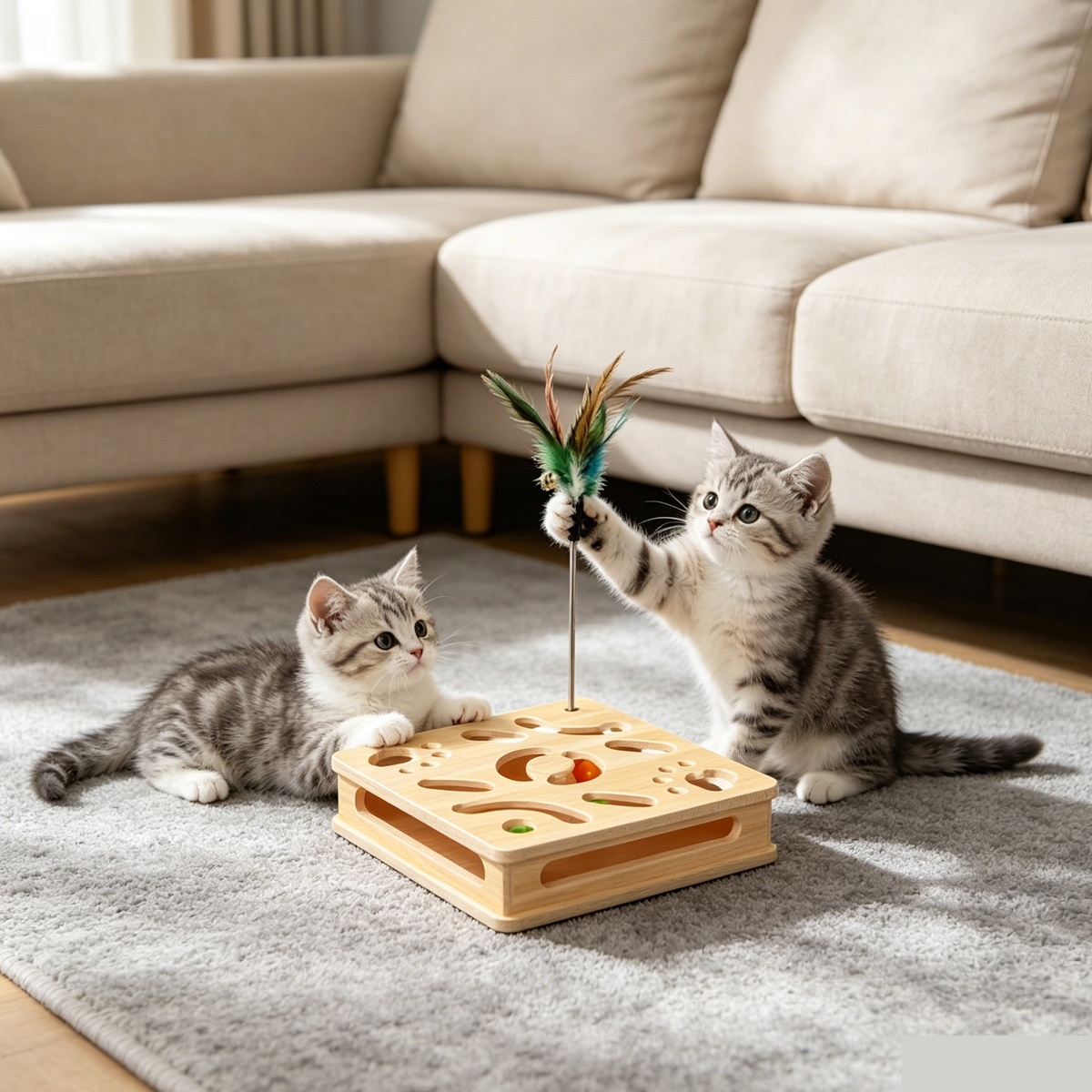
Indoor cats face unique challenges when it comes to staying active and mentally stimulated. Unlike outdoor cats, who have access to open spaces, prey, and natural exploration, indoor cats rely on their owners to provide opportunities for exercise and mental engagement. A lack of activity can lead to obesity, boredom, stress, and behavioral issues (such as excessive scratching, meowing, or aggression). Keeping your indoor cat active and mentally stimulated is essential for their physical health and emotional well-being. This guide shares practical, easy-to-implement tips to help your indoor cat activity stay active, happy, and healthy—all while being SEO-friendly and compliant with advertising laws.
1. Interactive Playtime: The Foundation of Indoor Cat Activity
Interactive play is the best way to keep your indoor cat active and mentally stimulated. It mimics the hunting instinct, providing physical exercise and mental engagement. Aim for 15-20 minutes of interactive playtime twice a day—this is enough to tire your cat out and keep them entertained.
① Choose the Right Toys
Cats love toys that mimic prey, such as feather wands, laser pointers, crinkle balls, and wand toys with bells. Rotate toys every few days to keep your cat interested—boredom sets in quickly if they have the same toys all the time. Avoid toys that are too small (a choking hazard) or toys with sharp edges (which can cause injury). For cats that love to chase, a toy mouse or a ball that rolls easily is a great choice. For cats that love to pounce, a feather wand or a toy that moves erratically will keep them engaged and boost overall cat mental stimulation.
② Play Like a Prey
When playing with your cat, mimic the movement of prey to trigger their hunting instinct. Move the toy slowly at first, then speed up, stop, and change direction—this simulates the movement of a mouse or bird. Let your cat pounce, bat, and chase the toy, and allow them to “catch” it occasionally—this gives them a sense of accomplishment and satisfaction. Avoid using your hands or feet as toys, as this can encourage biting and scratching.
2. Create a Stimulating Environment
In addition to playtime, creating a stimulating environment will help your indoor cat stay active and mentally engaged. A boring environment leads to boredom and behavioral issues, so adding new elements to your home can make a big difference.
① Add Climbing Spaces
Cats love to climb, and adding climbing spaces to your home will give them a chance to exercise and explore. Cat trees, wall shelves, and window perches are great options—they allow your cat to climb, jump, and observe their surroundings from an elevated position. Place climbing spaces near windows so your cat can watch the outside world, which also provides mental stimulation. Ensure climbing spaces are sturdy and safe, with non-slip surfaces to prevent falls and support regular indoor cat exercise.
② Provide Hiding Spots
Cats love to hide, and having hiding spots in your home will make them feel safe and secure. Cardboard boxes, cat caves, and enclosed beds are perfect for hiding. You can also create hiding spots by placing blankets over furniture or using a cat tunnel. Hiding spots not only provide mental stimulation but also give your cat a place to retreat when they feel stressed or overwhelmed, forming a key part of effective cat enrichment.
③ Rotate Environmental Enrichment
Change up your cat’s environment every few weeks to keep them engaged. Move their bed, toys, or climbing spaces to different areas of your home. Add new plants (cat-safe plants, such as cat grass or spider plants) for them to sniff and nibble on. You can also place a bird feeder outside a window—watching birds will keep your cat mentally stimulated for hours.
3. Food Puzzles and Treat-Dispensing Toys
Food puzzles and treat-dispensing toys are a great way to combine mental stimulation with physical activity. These toys require your cat to work for their food, which mimics the hunting instinct and keeps their mind active. There are many types of food puzzles available, from simple treat balls to more complex puzzles that require your cat to solve a problem to get the treat.
① How to Use Food Puzzles
Replace some of your cat’s daily food with food puzzles—this will encourage them to work for their meals instead of eating from a bowl. Start with simple puzzles (such as a treat ball that dispenses food when rolled) and gradually move to more complex puzzles as your cat gets better at solving them. You can also make your own food puzzles using household items, such as a cardboard box with holes cut in it (place treats inside, and your cat will have to paw at the box to get them out).
② Benefits of Food Puzzles
Food puzzles not only keep your cat mentally stimulated but also help prevent obesity by slowing down their eating. They also reduce boredom and behavioral issues, as your cat will be occupied with solving the puzzle instead of engaging in destructive behavior. For senior cats or cats with mobility issues, choose simple food puzzles that don’t require too much physical effort.
4. Socialization and Bonding
Socialization and bonding with your cat are important for their mental well-being. Indoor cats can become lonely or anxious if they don’t have enough interaction with their owners. Spending time with your cat, cuddling, and playing will help strengthen your bond and keep them happy.
① Cuddle Time
Most cats love cuddling, and spending 10-15 minutes a day cuddling with your cat will help them feel loved and secure. Pet them gently, talk to them in a soft tone, and let them curl up on your lap. This not only strengthens your bond but also reduces stress and anxiety in your cat.
② Introduce a Companion (If Suitable)
If your cat is lonely, introducing a second cat or a compatible pet (such as a dog) can provide them with companionship and playtime. However, it’s important to introduce them slowly and carefully to avoid conflict. Consult your vet or a cat behaviorist for tips on introducing a new pet to your home.
Conclusion: Keep Your Indoor Cat Happy and Healthy
Keeping your indoor cat active and mentally stimulated is essential for their physical and emotional well-being. By incorporating interactive playtime, creating a stimulating environment, using food puzzles, and bonding with your cat, you can help them stay happy, healthy, and entertained. Remember to be patient and consistent—every cat is unique, and it may take time to find what works best for your cat. With a little effort, you can create a home where your indoor cat thrives.